The answer, up front: same Games, different metals
An Olympic design was usually struck twice: once for circulation, in base metal, by the million — and once for collectors, in silver, by the thousand. The picture is the same. The price is not.
| Lucky Loonie, circulation (2004–2016) | Face value — one Canadian dollar. Bright uncirculated singles sell at $2.00–$3.50. |
|---|---|
| Lucky Loonie, sterling silver proof (2004–2010) | 7.0 g of .925 silver, sold in a capsule. Catalogue sold range $35–$75. |
| Vancouver 2010 quarters (2007–2009) | Face value circulated. The three coloured 2009 “moments” quarters reach $2–$6 uncirculated. |
| Montreal Olympic $5 and $10 (1973–1976) | Sterling silver, priced at melt: sold ranges $38–$50 and $75–$100. |
| Calgary Olympic $20 (1985–1987) | One troy ounce of silver in a coin: sold range $52–$70. |
| US Olympic silver dollars (1983–2002) | 90% silver, 0.7734 oz each — melt-tier at about $40–$50 for most; the low-mintage Atlanta uncirculated designs reach $85. |
The ranges are the JarSort catalogue’s researched sold ranges as of November 8, 2026; melt values move with the spot price, which the homepage updates daily. Two coins can share a design, a year and a picture — and differ by seventy dollars. The difference is never the sport. It is the metal, the finish and the packaging.
The Games on a coin tell you nothing. The metal tells you everything.
The story: the loonie that was nearly spent
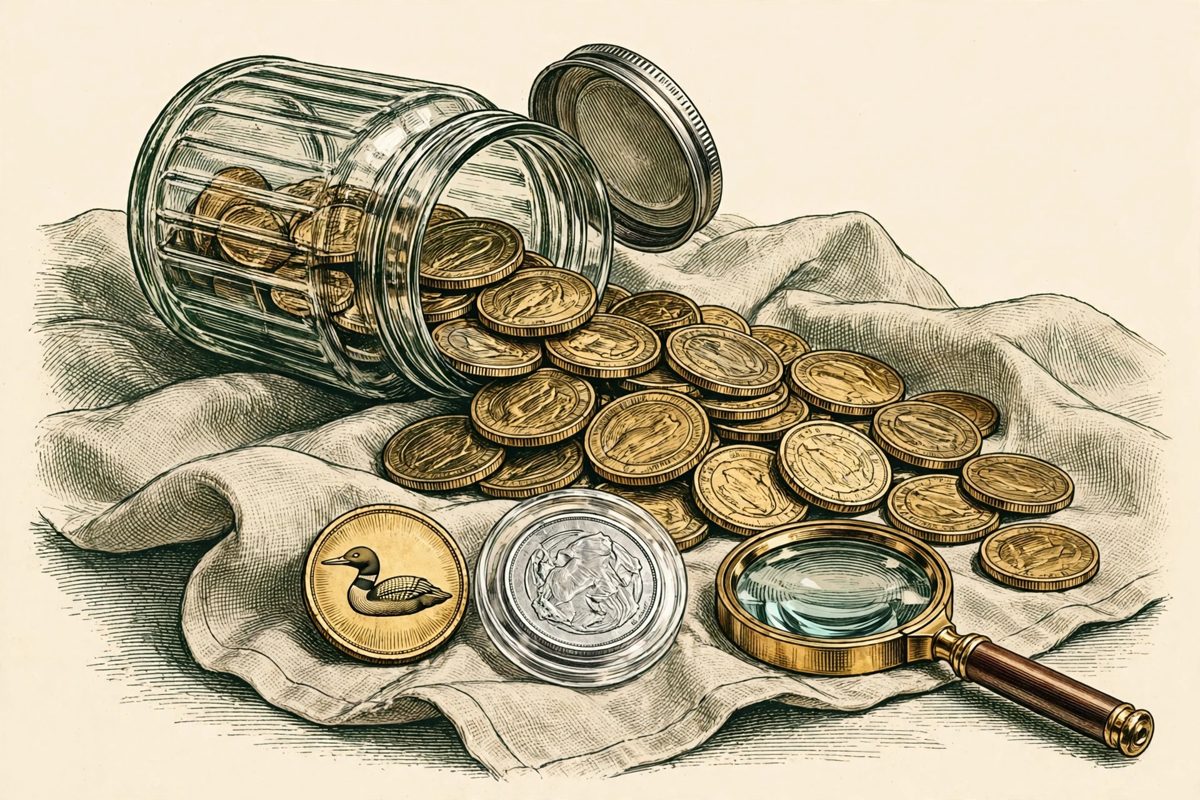
It sits at the bottom of the jar, under the quarters: a loonie in a clear capsule, its Olympic logo picked out in colour. Whoever saved it meant it as a keepsake. Whoever inherits it sees a dollar — and in one real sorting session this autumn, a coin exactly like it came within one handful of going into the parking-meter pile. What saved it was the capsule itself, and one second look. The coin inside was silver-white, not golden. It was the sterling-silver proof of the 2008 Lucky Loonie: seven grams of .925 silver, worth $35 to $75 — and the parking meter would have taken it at face value, happily, the way the bank takes the quiet silver of Guide 12.
One design, three coins: the Lucky Loonie ladder
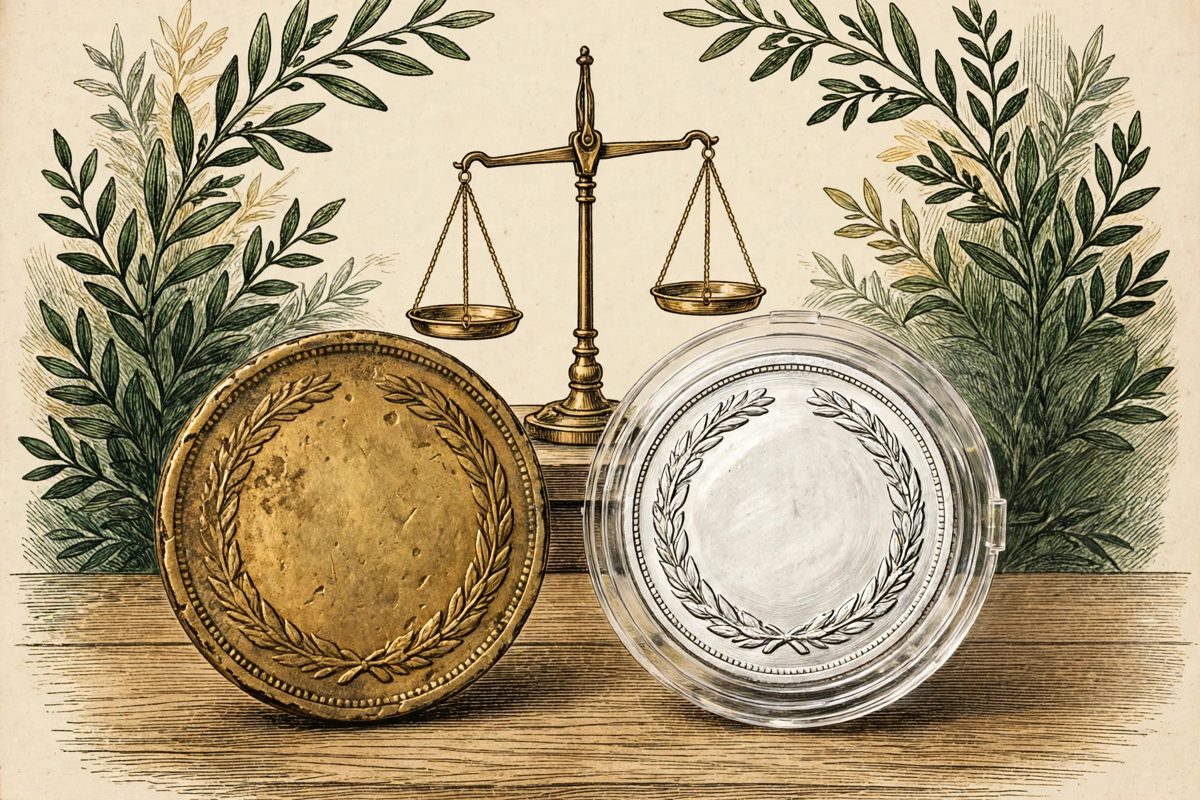
Canada struck a Lucky Loonie for every Games from Athens 2004 to Rio 2016, and the same design exists at three levels. At the bottom, the circulation coin: golden-coloured, five to eleven million struck a year, worth its dollar. In the middle, the specimen and proof-like strikes sold in collector sets — same golden metal, finer finish, guiding at $5.50–$28. At the top, the silver proofs: sterling silver for 2004, 2008 and 2010 (7.0 g, .925 fine, the later two with colour), then .9999 fine silver for 2012, 2014 and 2016 (7.89 g, sold range $21–$33).
Three tells, in order. Colour first: golden means the base-metal coin, silver-white means stop. Packaging second: circulation coins do not live in capsules, sets or cards. A magnet third: from 2012 the circulation loonie is plated steel and sticks; the silver proofs never do. The catalogue carries each level as its own entry, because pricing the wrong rung is a seventy-dollar mistake in one direction and an embarrassment in the other.
Vancouver’s quarters: fifteen designs, one premium corner
The Vancouver 2010 quarters are the bulk Olympic find in Canadian jars: twelve sports designs across 2007–2009, about 22.4 million of each, plus three coloured “greatest moments” quarters in 2009. In circulation condition, every one of the fifteen is worth twenty-five cents — the mintages saw to that. The premium corner is narrow and specific: uncirculated singles of the sports designs at $1–$3, and the three coloured moments — men’s hockey, women’s hockey, Cindy Klassen — at $2–$6 uncirculated, struck at about three million coloured apiece. The same Games also produced collector silver that never circulated: a $25 sterling hologram coin that trades at its melt value, and a $75 gold coin that trades from melt up. The full Vancouver set is priced on the Vancouver Olympic coins page.
The big silver: Montreal and Calgary
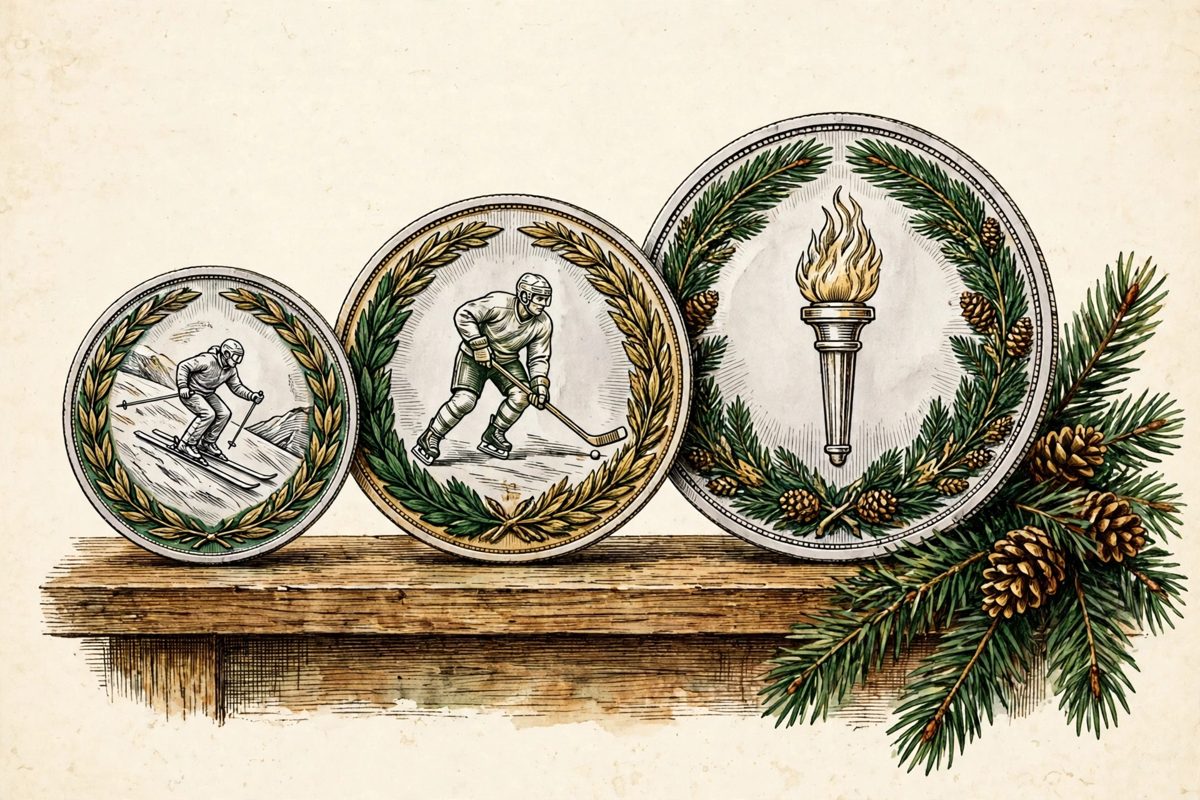
Before the loonies, Canadian Olympic coins were unambiguously collector pieces. Montreal’s programme (1973–1976) is twenty-eight sterling-silver coins: fourteen $5 designs at 0.7227 troy ounces each and fourteen $10 designs at 1.4453 ounces, in satin and proof finishes alike. Raw, they trade at melt with a thin premium — $38–$50 for the fives, $75–$100 for the tens. Calgary’s answer (1985–1987) is ten $20 proofs holding 1.0007 ounces each — a full troy ounce of silver in a coin, the simplest melt maths in this guide — at $52–$70. These are priced as metal, not as memorabilia: when silver moves, they move, and the Olympic premium on top is a few dollars at most.
South of the border: US Olympic dollars are bullion in costume
The American programme ran from the 1983 Los Angeles discus dollar to Salt Lake City in 2002 — and then stopped; no US Olympic commemoratives have been issued since. Almost every dollar shares the classic format: 26.73 grams of 90% silver, 0.7734 troy ounces, melt $40.22 at the $52 research anchor. The proofs sold in the millions and trade at that melt tier, and most uncirculated strikes join them. The exception is Atlanta 1996: eight designs whose uncirculated mintages run as low as 14,497 coins carry real premiums, to $85. The $5 gold coins of every Games year are the same story in gold — a quarter ounce each, melt-tier except for a handful of keys. It is the modern-commemorative pattern of the three numbers: the melt floor does the pricing, and the story on the coin is free.
Try it: the two-minute Olympic sort
- Pull every coin that names or pictures the Games — loonies with inukshuks and torches, quarters with sports, any big silver with a flame.
- Sort by metal and packaging, not by design: golden and worn goes to the face-value pile; silver-white, capsulated or in a set gets held back.
- Weigh what you held back. A loonie-sized coin at 7.0 g that is silver-white is the sterling proof; the big Montreal and Calgary pieces should feel every gram of their ounce-plus. The method is in reading a scale for coins.
- Run the held-back coins through JarSort for their three numbers — the first three verdicts are free — and label them the way the executor’s checklist keeps them, separately from the change.
That is the whole discipline. The Games on a coin tell you nothing; the metal tells you everything — and now the jar’s Olympic corner is priced by what the coins are, not by what they celebrate.