The answer, up front: three numbers, three jobs
| Number | What it measures | The conversation it belongs to |
|---|---|---|
| Melt floor | The metal alone: the coin’s weight and purity against the day’s spot price | “What is the least this coin can be worth?” — the scrap and bulk decision |
| Asking & guide range | What sellers ask and price guides list for the coin as a collectible | Estate paperwork, insurance schedules, comparing listings — the paper value |
| Dealer-likely pay | What a dealer would realistically offer to buy the coin today | The negotiation — the cash-on-the-counter number |
None of the three is “the real price” on its own. Each is the right answer to a different question, and most arguments about what a coin is “worth” are really two people quoting different rows of this table at each other.
Three numbers are not three opinions. They are three different transactions, priced.
The story: why one coin honestly has three prices
A coin lives in three markets at once. The first is the metal market, which is global and unsentimental: silver and gold are priced by the troy ounce, the price moves every day, and the site refreshes its spot prices daily for exactly that reason. The melt floor is the one number set entirely by strangers — and a coin in a jar can never be worth less than its metal for long, because the metal itself always has a buyer.
The second market is the collector market: listings, auctions and price guides. An asking price is a seller’s hope, and a guide value quietly assumes the right buyer eventually appears. That is not dishonesty; it is how collectibles trade. But it does mean the asking range describes a sale that may take months, to a buyer who may be three states away.
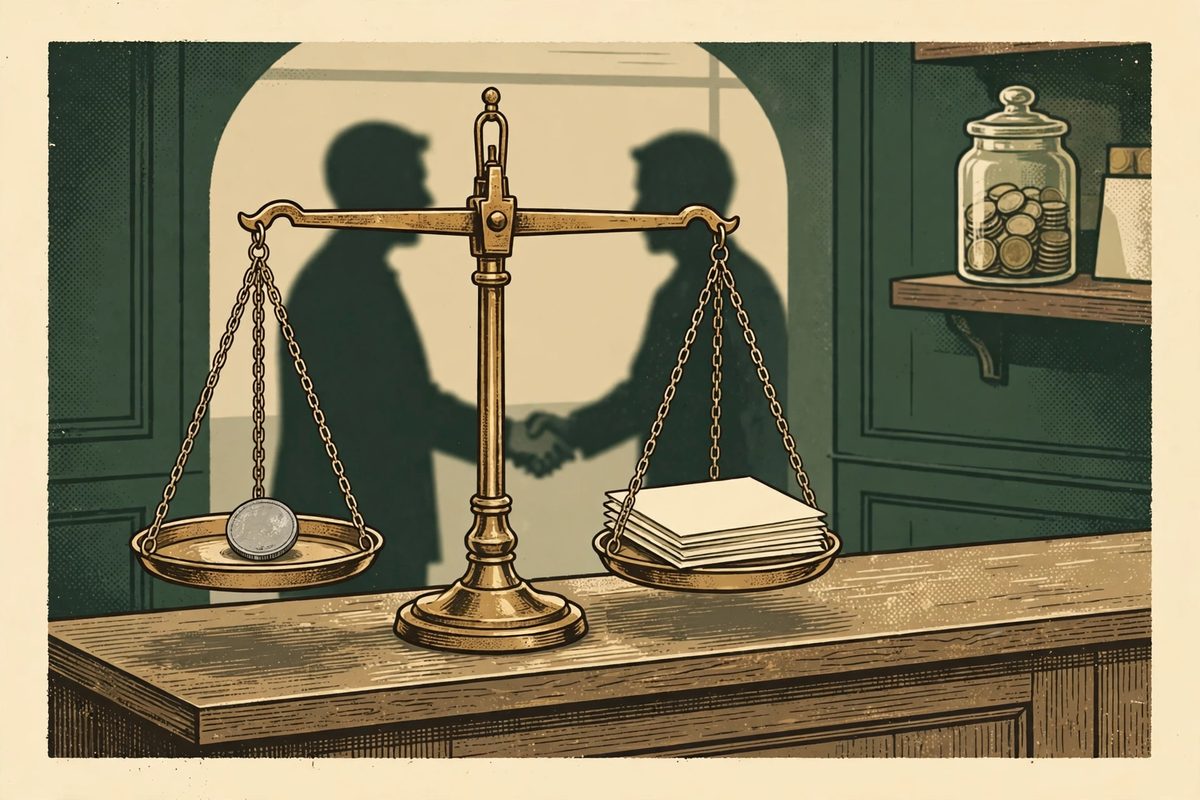
The third market is the shop counter, and it runs on different physics. A dealer pays cash today, takes the coin into stock, and carries two risks you no longer carry: the metal price can fall, and the coin can sit in the case for a year. When it finally sells, it sells at something like the asking range — and the difference between that range and what he paid you is his margin for the waiting, the risk and the rent. The dealer number is not a trick played on sellers. It is the price of certainty and immediacy, and knowing it in advance is what turns a lowball ambush into an ordinary negotiation.
What this means for your jar: the worked example
The verdict demonstrated on this site’s homepage is an 1883 Morgan dollar, circulated — and one caution before the numbers: they come from the site’s price snapshot of October 24, 2026, so read them as a worked example of how the three numbers relate, not as today’s live prices.
| Number | The example | Why it lands there |
|---|---|---|
| Melt floor | $41.61 | The coin holds 0.7734 troy ounces of pure silver; at that day’s spot price, the metal alone sets the floor |
| Asking & guide range | $42–$68 | As a collectible, a circulated 1883 Morgan trades above its metal — the range sellers ask and guides record |
| Dealer would pay | ~$31–$37 | Cash today, with the dealer taking on the waiting, the price risk and the resale |
Read in that order, the three numbers tell the coin’s whole story: the metal guarantees the first, the collector market explains the second, and the counter explains the third. Now match the number to the conversation you are actually having. Selling a worn, common coin for its metal? The melt floor is your reference, and you should not accept far below it without a reason. Recording a coin in an estate inventory or an insurance schedule? Use the asking & guide range — that is the paper value. Sitting across from a dealer? The dealer number is the honest starting point, and the melt floor is your walk-away line. And do what the site advises every jar owner to do: take the dealer sheet to two dealers and compare offers — offers vary by region and market, and the second quote is the cheapest education in this hobby.
Before you read any verdict: pin down which coin you have
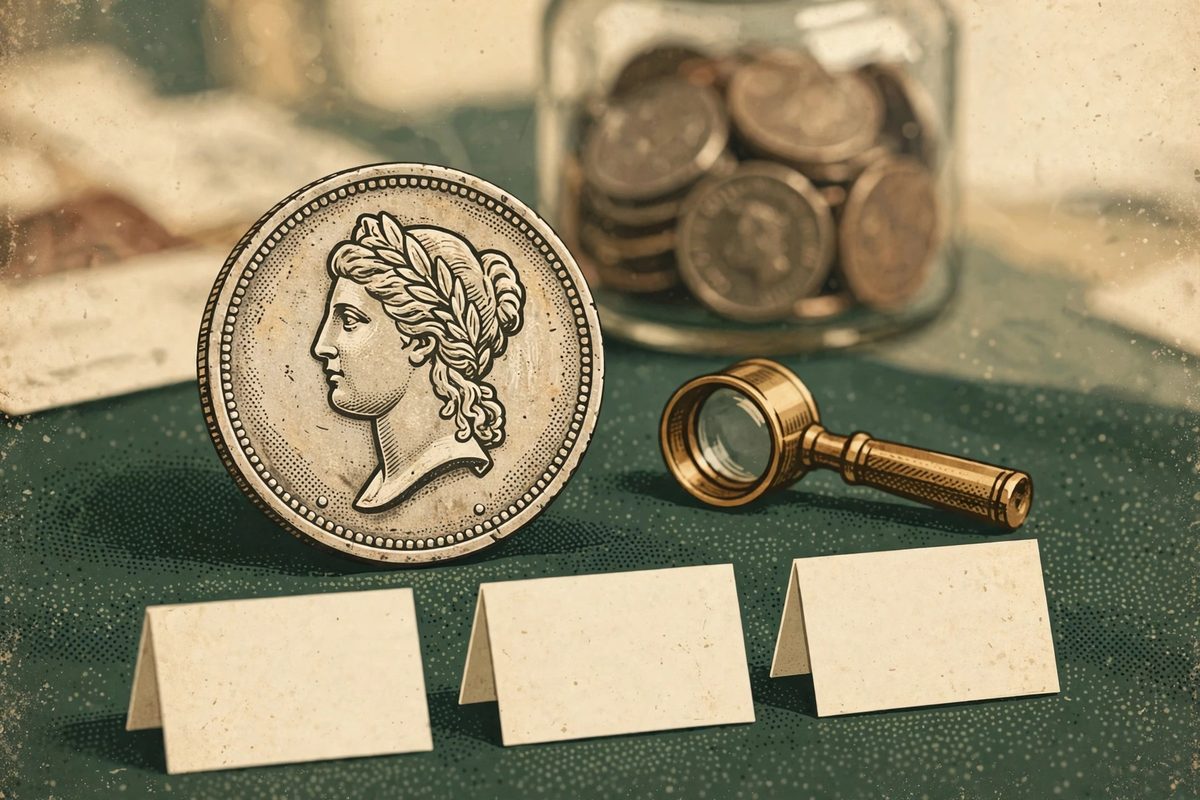
The three numbers are only meaningful once the coin itself is pinned down, and the earlier guides are the tools. Guide 2 teaches the weigh-in: the weight confirms the metal the melt floor is computed from — a coin that weighs wrong is a different coin, or not silver at all. Guide 5 teaches the mint mark: one small letter can move you to a scarcer row of the table entirely, where all three numbers change at once. That is also why the sorter keeps a “worth a closer look” pile: a key date can be worth many times its melt floor, and the three numbers, read together, are how you spot it instead of spending it.
So run one coin from your jar through the sorter, weigh it, read its letter, and then look at its three numbers in order. You will know what its metal guarantees, what its market hopes, and what its handshake pays.
Melt is the floor, asking is the hope, dealer pay is the handshake. Know all three, and no one can quote you just one.