The answer, up front: seventeen coins, face value — mostly
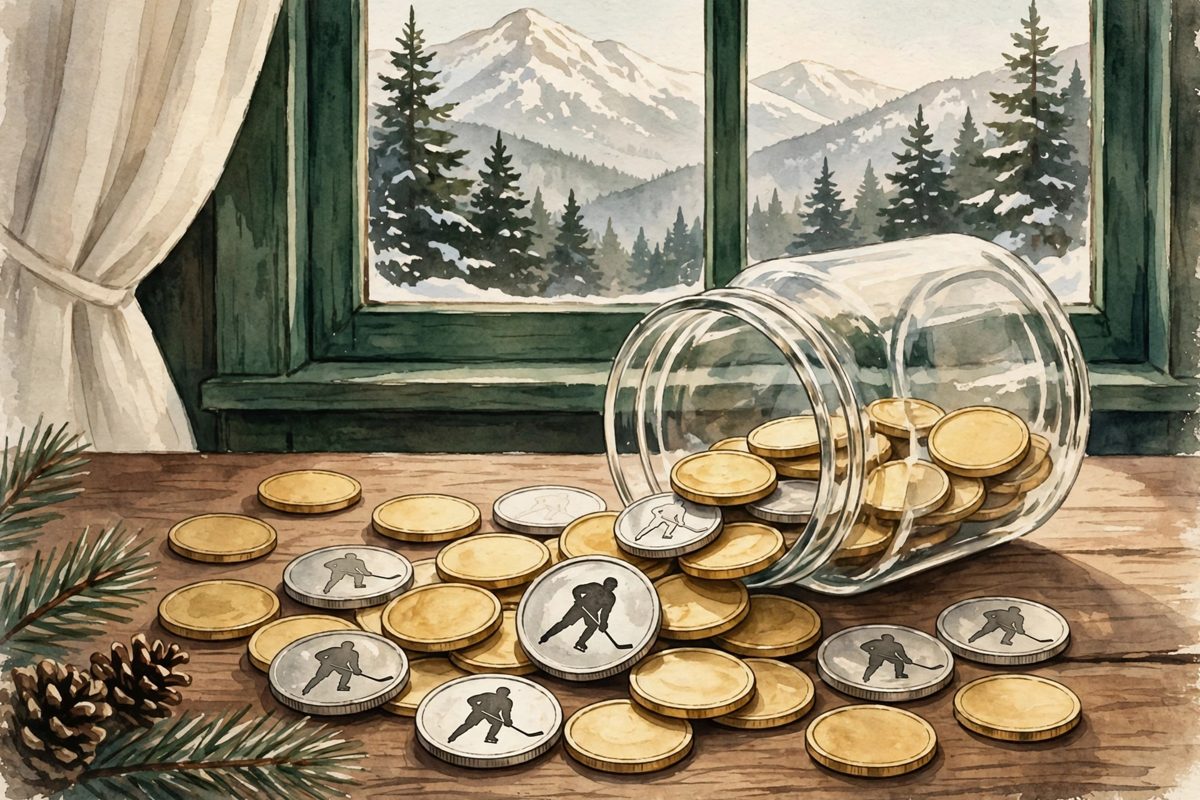
Tip a Canadian jar of change onto the table and the Vancouver 2010 coins are the ones you will recognise first: a quarter showing a hockey player, a skier, a curler, and a golden loonie carrying the inukshuk emblem of the Vancouver Games. They belong to one set of seventeen coins struck for the 2010 Winter Olympics and Paralympics in Vancouver — fifteen quarters and two one-dollar Lucky Loonies. And the honest answer comes first: a circulated one is worth exactly its face value. A quarter is twenty-five cents; a loonie is one dollar. No silver hides in any of them.
That is not the end of the story. The three coloured quarters are worth a little more when they are uncirculated, and a complete set of all seventeen, kept together in its folder, sells for real money — about fourteen to twenty-five dollars. The value here is not in a single rare coin. It is in finishing the set.
Seventeen coins, one winter, no silver — and the set is still worth finishing.
The story: how a Winter Games got into pocket change
The Royal Canadian Mint released the quarters in waves, one sport at a time, from 2007 to 2009, with the Royal Bank of Canada as sponsor. The first five arrived in 2007: Alpine skiing, biathlon, curling, ice hockey, and wheelchair curling, one of the two Paralympic sports. Four more followed in 2008: bobsleigh, figure skating, freestyle skiing, and snowboarding. The last three sports came in 2009: cross-country skiing, speed skating, and sledge hockey, the second Paralympic sport, released in March 2010, weeks after the Games themselves had closed.
Then came the three that everyone remembers. In 2009 the Mint also released three coloured quarters celebrating great Canadian Olympic moments: the men’s hockey gold, the women’s hockey gold, and speed skater Cindy Klassen. Each design was struck in the tens of millions — about twenty-two million four hundred thousand per design — but only three million of each of the three moments quarters were coloured. That is why the coloured ones are the scarce ones, and the ones people hunt for.
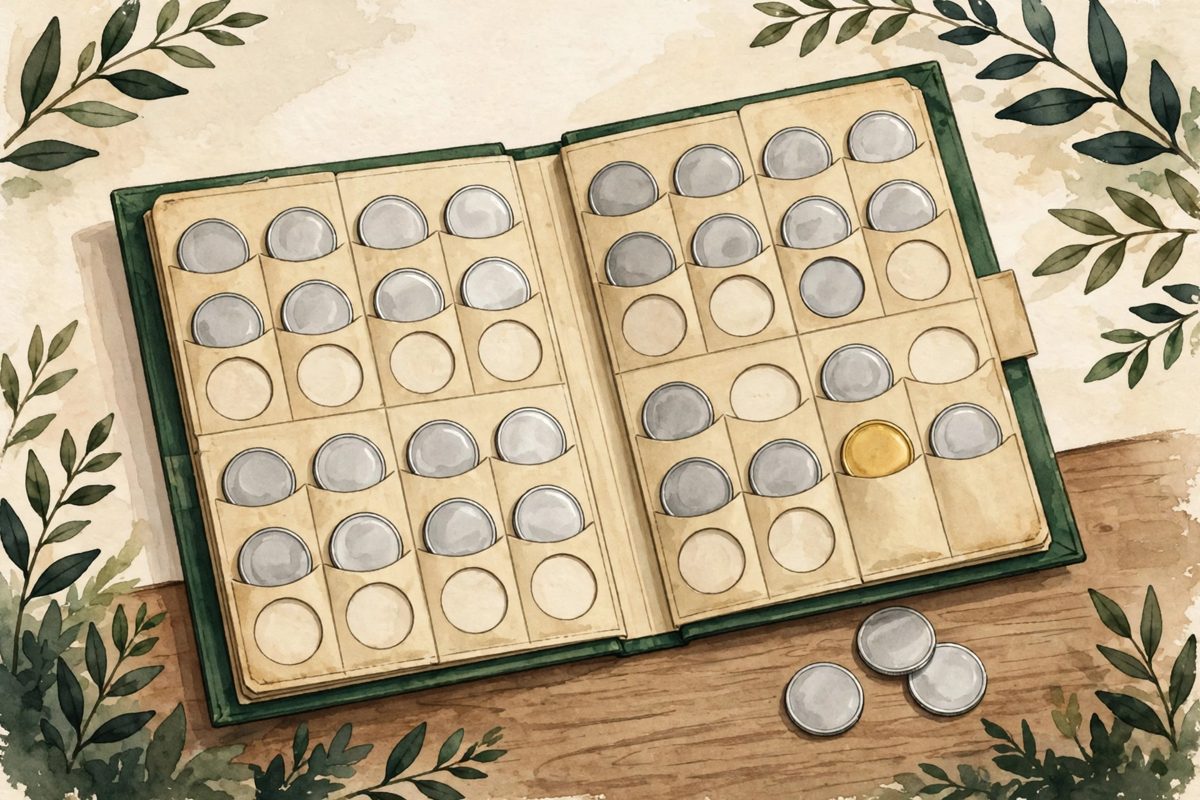
The two loonies complete the set. The 2008 Lucky Loonie carries the loon taking flight beside the Canadian Olympic Team's logo, and the 2010 Lucky Loonie carries Ilanaaq, the inukshuk emblem of the Vancouver Games. Both were struck in the millions — the 2010 coin alone had a mintage of ten million two hundred fifty thousand — and both spent like ordinary dollars. The Mint and the bank sold a cardboard folder to hold all seventeen, and that folder is the reason the set still turns up complete in estates today: someone filled it, put it in a drawer, and forgot it.
What this means for your jar: steel, not silver
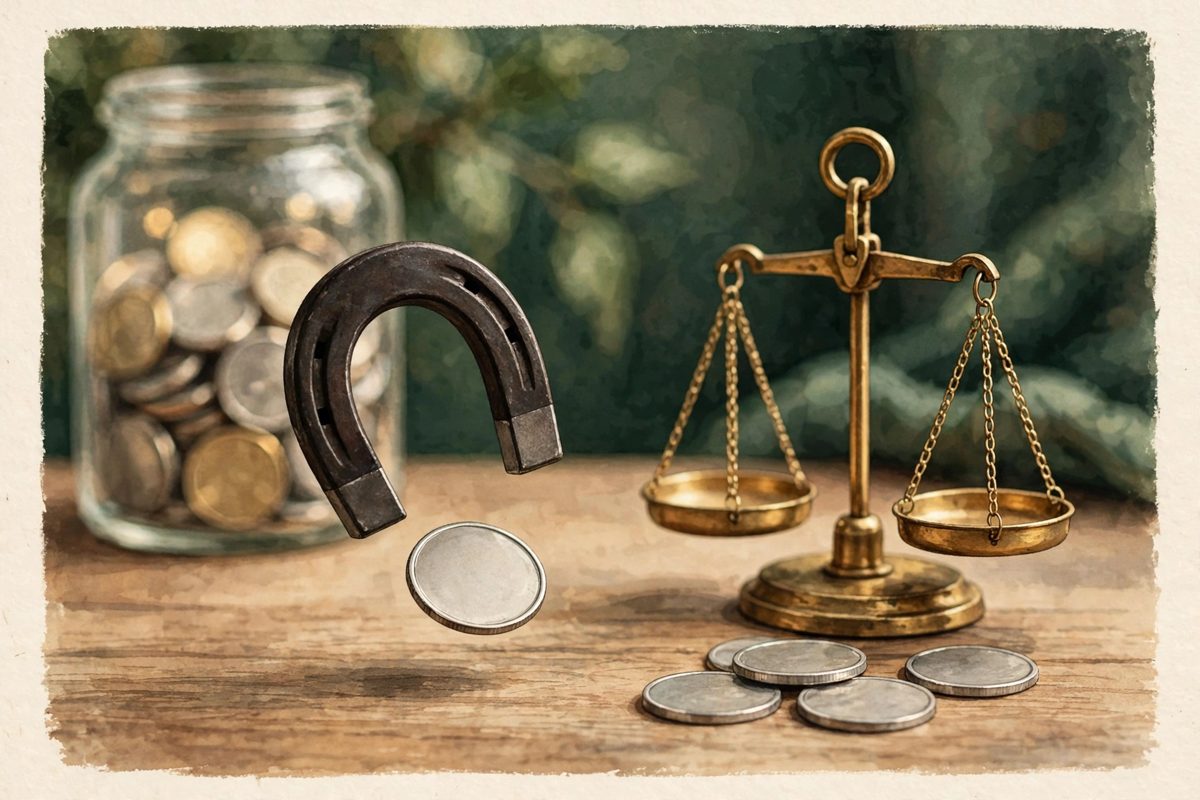
Here is the fact that saves the most disappointment. Every one of the fifteen quarters is nickel-plated steel: four point four grams, twenty-three point eight eight millimetres, the standard modern quarter. There is no silver in any of them, coloured or plain. A magnet will stick to them — steel does that, and silver never does — so the magnet test that catches silver in older coins gives the opposite answer here. If it sticks, the coin is exactly what it should be.
| Plain sport quarters (12 designs) | Circulated: face value, twenty-five cents. Uncirculated singles: one to three dollars. |
|---|---|
| Coloured moments quarters (3 designs) | Circulated: face value. Uncirculated singles: two to six dollars. |
| Lucky Loonies, 2008 and 2010 | Circulated: face value, one dollar. |
| Complete 17-coin set in the folder | About fourteen to twenty-five dollars; a dealer pays about eight to twelve dollars for one. |
Read the table the right way round. A worn coloured quarter pulled from circulation is still twenty-five cents — the colour premium belongs to uncirculated coins, the crisp ones that never saw a cash register. The same goes for the plain sports: an uncirculated single is worth a dollar or two to a collector who needs that design, but a dealer buying a circulated pile pays face value, because that is what the coins are. The set is where the money is, and only because someone kept all seventeen together: the folder turns seventeen pieces of pocket change into one finished object a buyer wants.
Two traps are worth knowing. The first is the Petro-Canada sport cards: the same sport designs were also sold, painted, on collector cards at service stations. Those are collector packaging, not circulation finds, and they do not count as the circulation coins in the folder. The second is a genuine rarity hiding inside the common: a variety of the coloured men’s hockey quarter with a raised numeral two is scarce enough to be error-checklist material — if your coloured men’s hockey quarter looks unusual, set it aside and check it against a reference before spending it.
Try it: finish the set
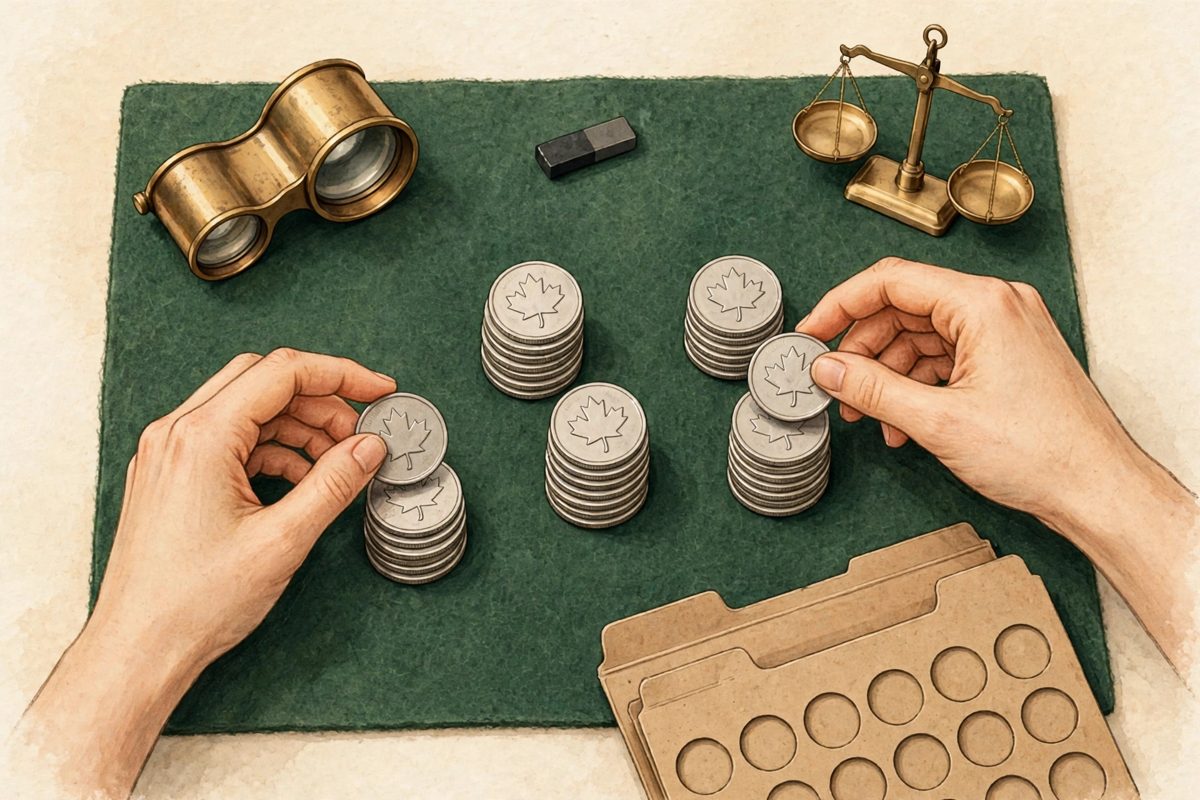
- Tip out the quarters and pull every 2007, 2008 and 2009 coin with a sport on the back. Twelve designs make the plain set: five from 2007, four from 2008, three from 2009.
- Look for the colour. The three moments quarters — men’s hockey, women’s hockey, Cindy Klassen — carry red and colour on the design. Three million of each were coloured, so they turn up, but far less often than the plain sports.
- Check the loonies. The 2008 and 2010 Lucky Loonies belong with the quarters; the 2010 coin shows the Ilanaaq inukshuk.
- Grade honestly. Crisp, unworn coins go in the keeper pile; worn ones are still worth face value, so spend the duplicates without regret.
- Keep the folder if you have it. A complete seventeen in its folder is the version a buyer wants; seventeen loose coins are seventeen quarters and two dollars.
One caution, and it is the same one as everywhere in this hobby: do not clean any of them to read them better — Guide 4 explains why. A readable date is worth having; a scrubbed coin is worth less than a dirty one.
The keepers deserve the same finish as any coin from the main catalogue: a Mylar flip, a label with the design and the year, and a line on the jar sheet. A dealer buying a finished set asks one question first — is it complete? — and a labeled set answers it before he asks.
The Vancouver set is not a treasure hunt. It is a souvenir of a winter the whole country watched — and a finished set is worth more than the sum of its quarters.