The answer, up front: what counts as cleaning
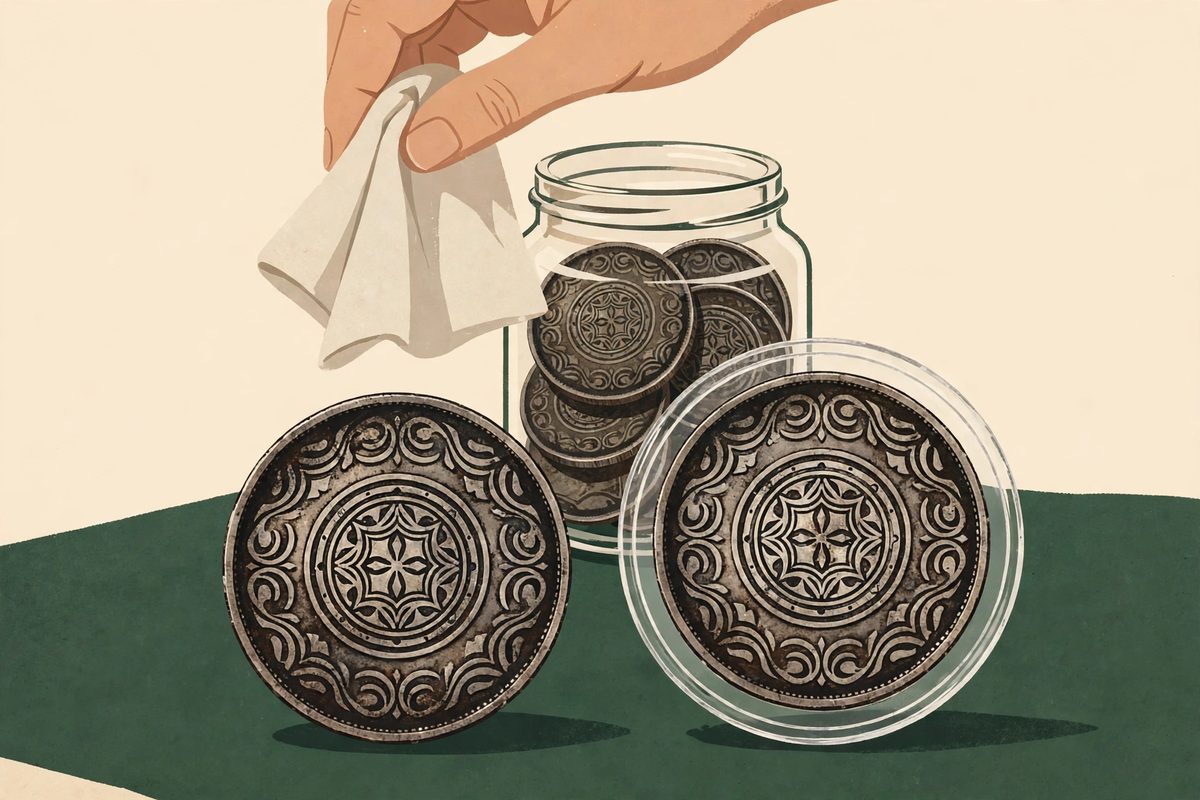
Everything a well-meaning owner does to a coin lands in one of two columns. If it touches the surface with friction or chemistry, it is cleaning, and cleaning is forever. If it only lifts what is sitting on the surface, it is care. The whole guide is that one distinction:
| Move | What it really does | Verdict |
|---|---|---|
| Wipe or polish — cloth, toothpaste, silver polish, pencil eraser | Drags grit across the surface, cutting permanent hairline scratches and stripping the original skin | Never |
| Dip in a coin or jewellery cleaner | Dissolves a thin layer of the metal itself; the coin comes out bright, flat and lifeless | Never |
| Scrub with a brush, even a soft one | The same hairlines, dragged in both directions | Never |
| Soak in distilled water, no rubbing, air-dry | Lifts loose dirt that is only sitting on the surface | Safe |
| Brief soak in pure acetone | Dissolves PVC slime and tape residue, then evaporates; the solvent does not react with the metal | The one accepted exception — still never scrub |
The grading services print that distinction on the holder. A cleaned coin comes back labelled Cleaned — Details: genuine, authenticated — and graded no further. Coins carrying that label typically sell for a fraction of an untouched example of the same date and type. The label never comes off, because the damage it describes never heals.
You cannot wash a coin back to original. Original is the one thing cleaning removes.
The story: the skin a coin grows
A coin leaves the mint with a fresh surface, and then the world starts writing on it. Air, moisture, the cloth of a pocket, the paper of an envelope — over decades they grow a skin on the metal: toning. On silver it runs from pale gold to grey to near-black; on copper, from red to brown. It is not a coating applied to the coin. It is the coin’s own outermost metal, changed by time.
Collectors prize that skin because it is evidence. An original surface says the coin has been left alone since it circulated — nobody has improved it, hidden anything under polish, or scrubbed a problem away. Under magnification the difference is easy to see: an untouched coin’s fields are smooth, while a wiped coin’s fields are combed with hairlines, fine parallel scratches where grit was dragged across the metal. They catch the light from every angle, and they never fade.
Which is why “bright” is a warning word on an old coin. A two-hundred-year-old coin that gleams like a new one has usually been helped to gleam: dipped until its surface dissolved even, or polished until its detail softened. The shine is real. So is the discount. Dealers check for cleaning before they check almost anything else, because it is the one flaw no later owner can fix, excuse, or wait out.
What this means for your jar
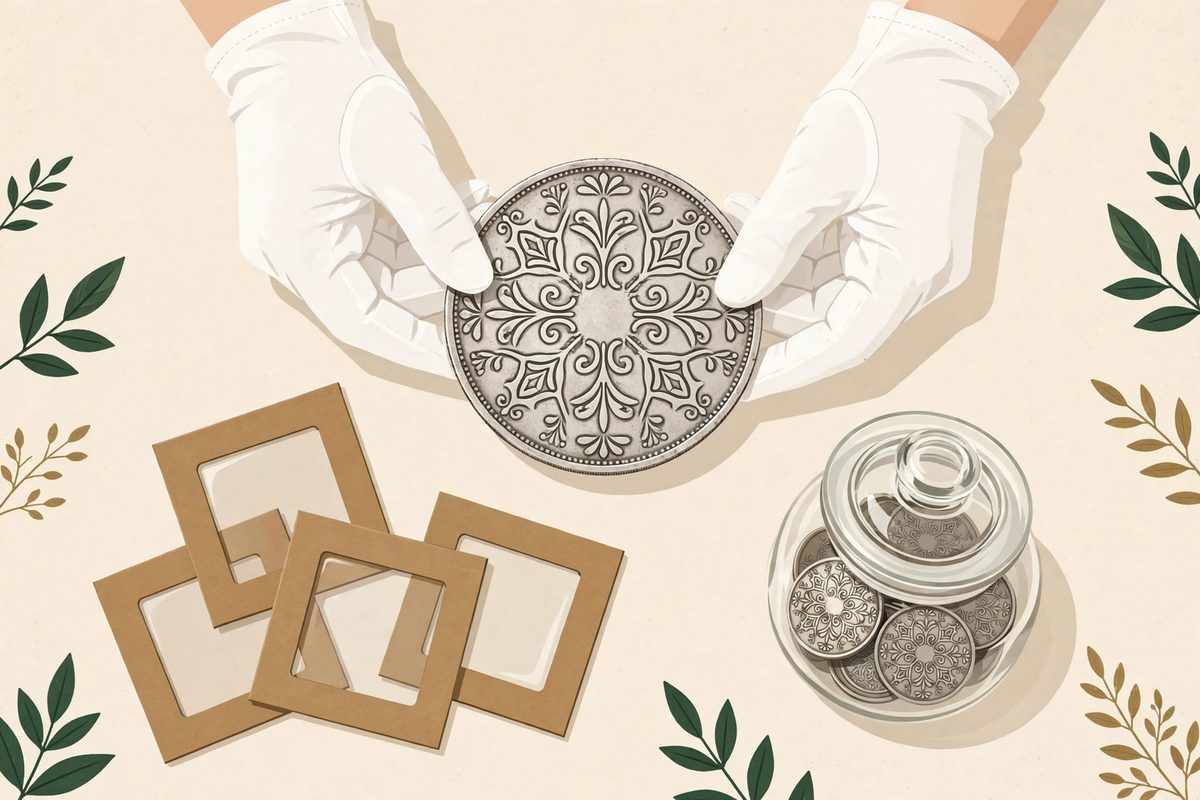
- Edges only, always. Pick every coin up by its rim, between thumb and forefinger, with clean dry hands — or cotton gloves if you have them. A fingerprint left on a face can etch itself into the metal for good; the rim is the handle the mint gave you.
- Loose dirt gets water, nothing more. If a coin is merely grubby, soak it in distilled water until the loose dirt lifts, then let it air-dry on a soft towel. No rubbing, no towelling off, no brush. What only sits on the surface comes off; what is the surface stays.
- Sticky residue gets the one exception. Green slime or a gluey film usually means a soft PVC holder has been sweating onto the coin. A brief soak in pure acetone dissolves that residue and tape goo, and the acetone then evaporates without reacting with the metal at all. Pure acetone only — not nail-polish remover with its additives — in a ventilated spot, away from any flame, and still with no scrubbing: soak, lift out, air-dry.
- Store inert. Keepers belong in Mylar 2×2 flips — the stiff, inert kind — or other holders made for coins. Soft, flexible PVC holders are the ones that grow the green slime in step three; a coin can sit unharmed in an inert flip for decades.
- An inherited jar gets identified before it gets touched. Clean nothing — nothing — until the valuable coins are known. The dullest, darkest coin in the jar may be the most valuable one in it, and it is valuable exactly as it sits. Sort first (the free tool below), then weigh and edge-check the keepers with Guides 2 and 3, and only then decide what each coin needs. Most will need exactly what they have had for fifty years: to be left alone.
None of this is a skill. It is the absence of one gesture — the wipe that feels like help. The other guides in this series teach things to do with a coin: weigh it, stand it on edge, read its mint mark. This one teaches the thing not to do, and it is worth more than the rest combined.
A dirty coin can still be a valuable coin. A cleaned coin has already spent part of its value on shine.