The answer, up front
| Unit | In grams | Used for |
|---|---|---|
| Troy ounce (oz t) | 31.1035 g | Gold, silver, platinum and palladium prices; bullion coins |
| Regular ounce (avoirdupois, oz) | 28.3495 g | Groceries, body weight, postage — everyday weighing |
| Troy pound | 12 troy oz = 373.24 g | Historical; almost never used today |
| Regular pound (lb) | 16 oz = 453.59 g | Everyday weight |
- A troy ounce is about 9.7% heavier than a regular ounce.
- A troy pound is lighter than a regular pound — it only has 12 ounces in it, not 16.
- When a metal price is quoted “per ounce” — silver at fifty dollars, say — that is always a troy ounce. No exceptions.
Underneath both systems sits one unit they agree on: the grain, traditionally the weight of a single barley corn. A troy ounce is 480 grains; a regular ounce is 437.5 grains. Every difference between the two ounces — and both pounds — is just that one disagreement, multiplied up.
The ounce got heavier; the pound got lighter. Blame the number of ounces in the pound.
The story: two systems, two trades
In the twelfth and thirteenth centuries, the richest meeting point in Europe was not a stock exchange. It was a fair. The Champagne fairs in France drew merchants from everywhere, and the greatest of them were held in a town called Troyes. Silver and gold changed hands there by the trayful, and merchants who spoke six languages needed one weight they could all trust. The weight of the fair took the town’s name: troy.
Everyday goods went the other way. Wool, grain, cheese — anything bulky — was weighed in avoirdupois, from an old French phrase meaning “goods of weight”: sixteen ounces to the pound. That is the ounce on your kitchen scale and in your recipes today.
Why did precious metals never switch? Because their trade was international, conservative, and counted in single grams of money. The fair standard stuck. Even pharmacists borrowed it — the old apothecaries’ ounce was a troy ounce. And for centuries, a pound of money was literally a pound of silver: 240 pennies weighed exactly one troy pound of sterling silver, which is why the British currency is still called the pound.
Britain finally abolished the troy pound by law in 1878 — but kept the troy ounce, specifically for precious metals, and the world kept it too. In 1959 an international agreement fixed the underlying grain to an exact metric value, which is why we can now state it precisely: one troy ounce is exactly 31.1034768 g.
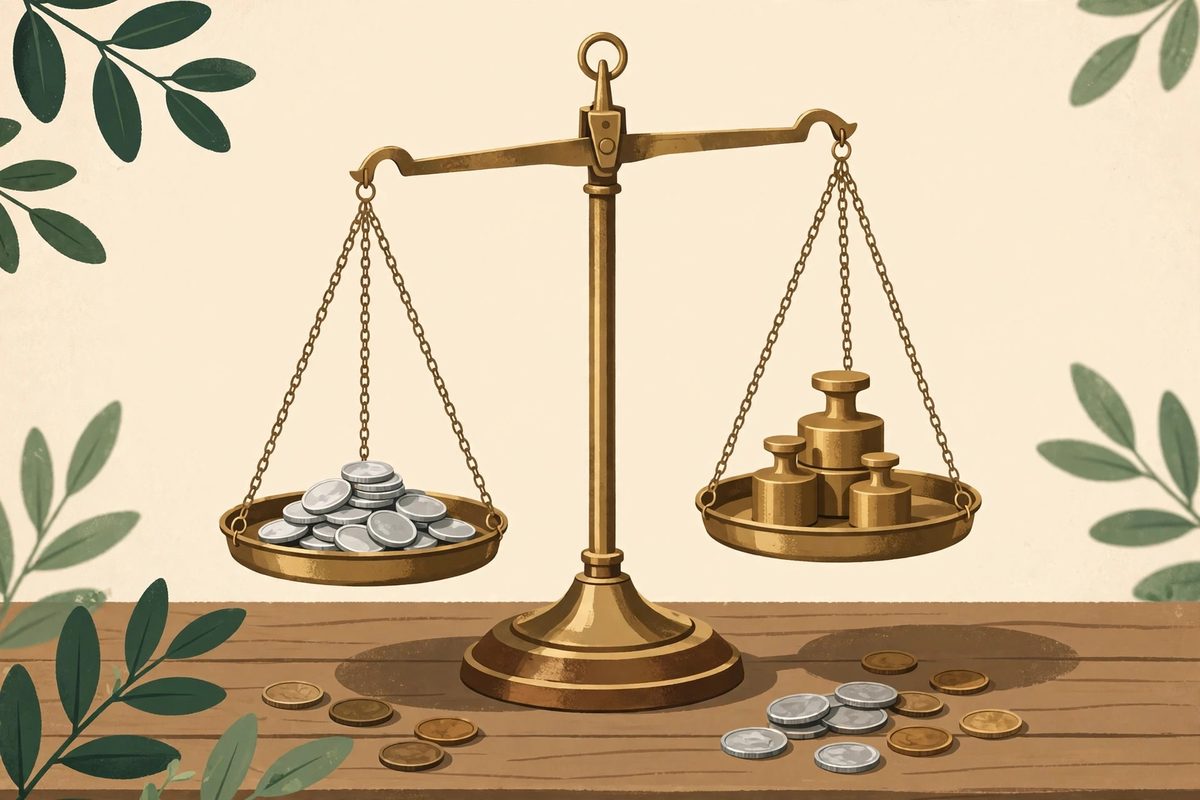
Which settles a famous riddle — and now you can win it both ways. Which weighs more, a pound of gold or a pound of feathers? The feathers: a regular pound is 453.59 g, a troy pound only 373.24 g. But an ounce of gold outweighs an ounce of feathers, 31.1035 g against 28.3495 g. Both halves of the trick are true. That is what makes it a good riddle.
What this does to a coin jar
- Every melt number is troy math. A 1964 quarter holds 0.1808 troy ounces of pure silver; multiply by the spot price and you have its melt floor. Run the same sum in regular ounces and you underprice your own coin by about ten percent.
- A worked example. Ten pre-1965 quarters are $2.50 face value and hold about 1.81 troy ounces of pure silver between them. At a $50 spot price, purely for the arithmetic, that is roughly $90 of melt — from ten coins that still spend as two dollars and fifty cents.
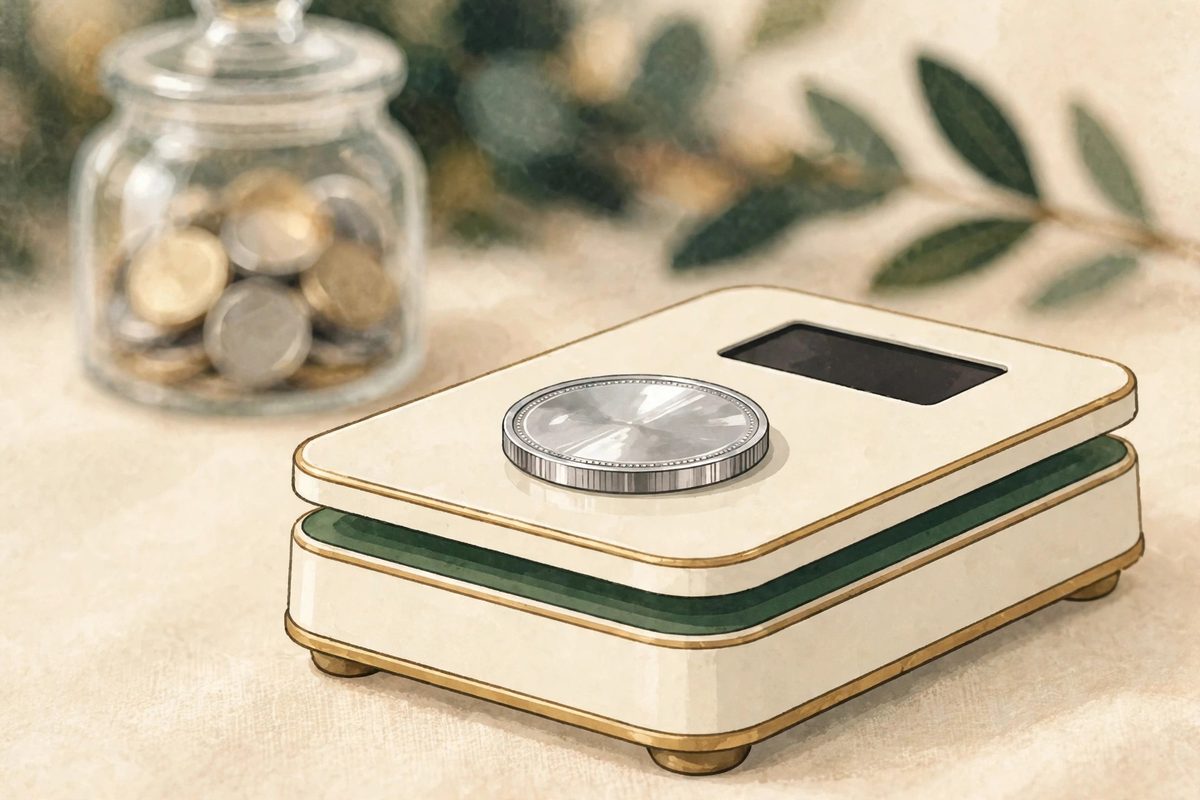
- The kitchen-scale trap. Put a one-ounce silver coin on a kitchen scale set to ounces and it reads 1.097 oz. The coin is not fake and the scale is not broken — the scale is speaking avoirdupois and the coin was minted in troy. Weigh in grams instead: 31.1 g is exactly one troy ounce.
- Check the scale’s mode before you sell. Coin scales offer several: g (grams — safest), ozt (troy ounces), dwt (pennyweights — 20 dwt make one troy ounce, and dealers still use them), and plain oz, the regular ounce, which is the trap.
- Ignore the fluid ounce. That third “ounce” measures volume — a shot glass, not a weight. It has nothing to do with coins.
So the next time a coin “weighs wrong”, remember: it probably weighs exactly right. It is just being weighed in the wrong century’s ounce.