The answer, up front: one card for two years
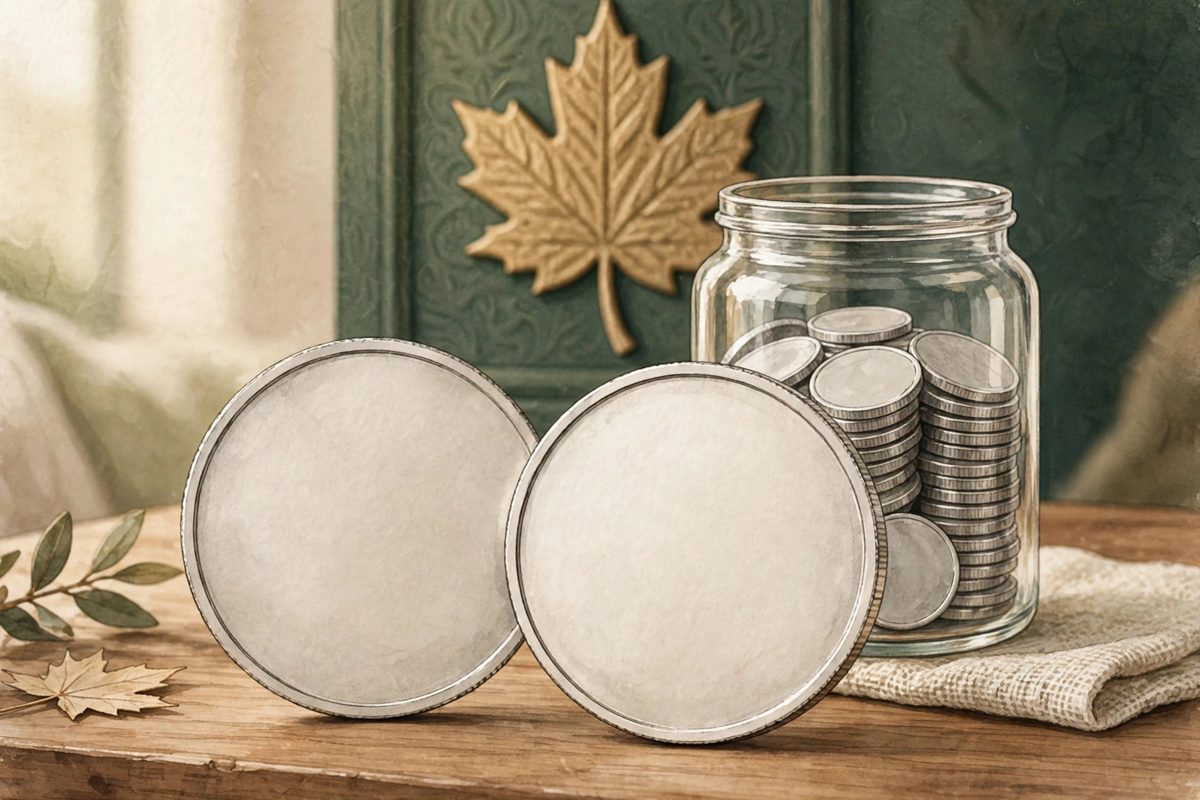
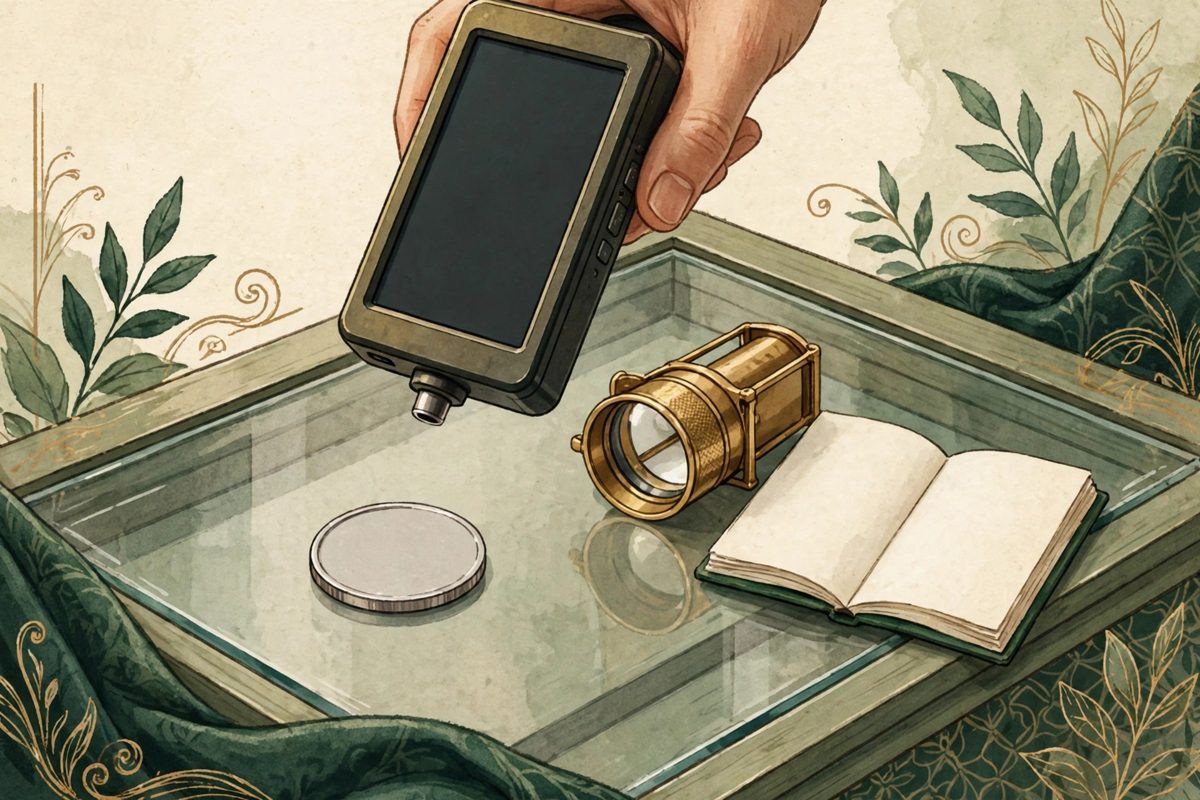
1967: every Canadian dime and quarter dated 1967 is silver — but the Mint quietly switched partway through the year from .800 fine silver to .500 fine, with no change to the design, the weight or the markings. A 1967 dime or quarter can be either, and only an XRF test can tell which. 1968: dimes and quarters come in two metals — .500 silver or pure nickel — and a magnet settles it in one second: silver does not stick, nickel jumps. The half dollars and dollars are simpler: 1967 is .800 silver, 1968 is nickel. The two years on one card:
| 1967 dime | .800 or .500 silver — identical weight and design; XRF decides |
|---|---|
| 1967 quarter | .800 or .500 silver — identical weight and design; XRF decides |
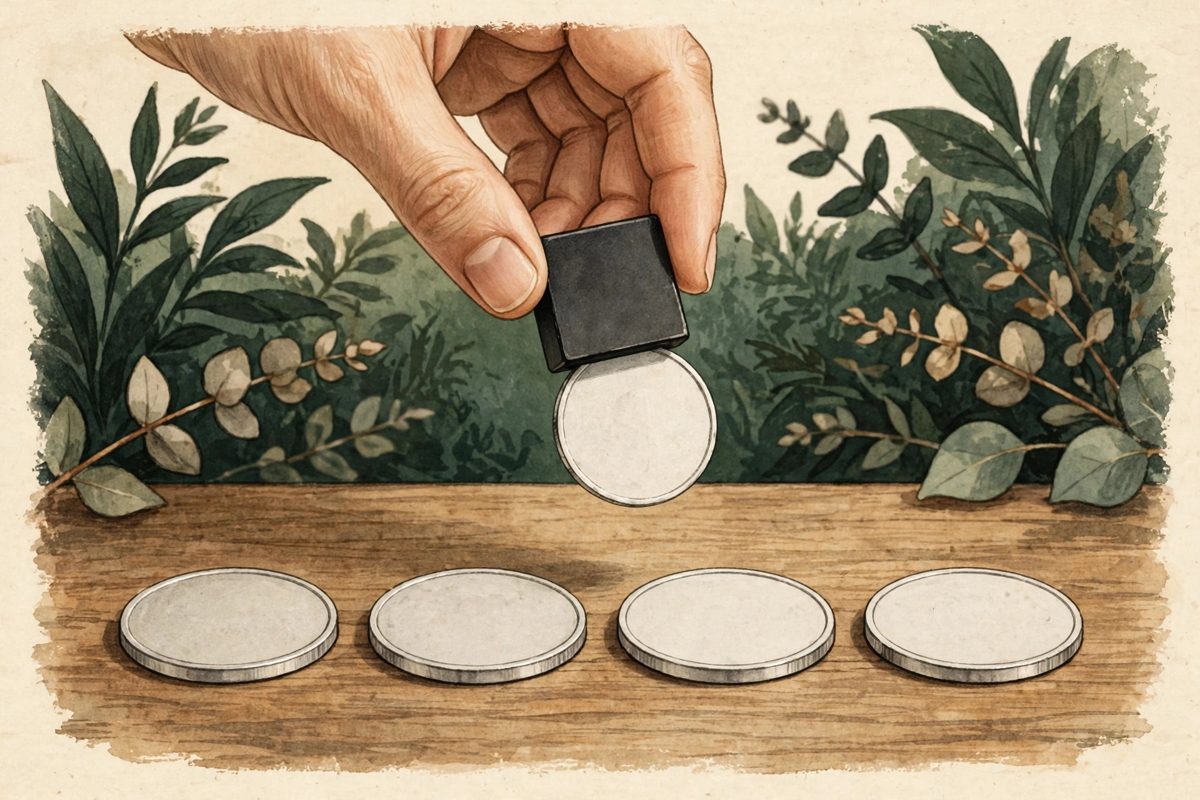
| 1968 dime | .500 silver or pure nickel — the magnet decides |
| 1968 quarter | .500 silver or pure nickel — the magnet decides |
| 1967 half & dollar | .800 silver, by date alone |
| 1968 half & dollar | Nickel, by date alone |
At the closing silver spot (Oct 24, 2026 · Kitco) the melt floors are: a .500 dime $2.02, an .800 dime $3.23, a .500 quarter $5.05 and an .800 quarter $8.07 — and this page recomputes them from the latest close, so the gap between the two 1967 finenesses is always the live one.
Date first, magnet second, XRF last — that order sorts both years.
The story: a centennial, then a retreat
1967 was Canada’s centennial, and the Mint celebrated with new animal designs by Alex Colville — a mackerel on the dime, a bobcat on the quarter — all struck in .800 silver, the standard since 1920. But silver’s price was climbing, and partway through that enormous centennial production run the Mint cut the fineness to .500 to stretch its silver stock. Nothing on the coin changed. Same animals, same weight, same ring when dropped. The two finenesses left the Mint mixed together, and they have been travelling together in jars and rolls ever since — which is why a jar from those years can hold two dimes that look identical and melt for noticeably different money.
In 1968 the retreat finished. Ottawa struck dimes and quarters in .500 silver for part of the year, then switched to pure nickel — and with minting capacity stretched, some of the nickel dimes and quarters were struck in Philadelphia as well. Pure nickel is magnetic and silver is not, which is why this second changeover, unlike the first, can be sorted on a kitchen counter. By 1969 the small change was all nickel, and a century of Canadian silver coinage was over.
What it means for your jar
Sort the two years by different rules. Every 1968 dime and quarter gets the magnet pass. The ones that stick are nickel — face value, spend or keep as you like. The ones that do not stick are .500 silver, worth several times face in melt alone; they go in the silver pile. Every 1967 dime and quarter goes in its own pile, priced as .500 until proven .800. That is how the market treats them: in the JarSort catalogue (asking and dealer ranges researched Oct 24, 2026) a 1967 dime lists at $2.90–$4.10 asking with an estimated dealer range around $1.30–$1.48, and a 1967 quarter at $7.00–$8.80 asking, dealer around $3.24–$3.71 — .500 money, because a buyer cannot assume the better fineness. A dealer with an XRF gun can settle a whole pile in minutes; if yours turn out .800, the melt floor alone rises by about sixty percent, so on a handful of coins the test is worth asking for.
One honest complication: references disagree slightly on 1968 silver weights. NGC lists the .500 dime at 2.33 g and the quarter at 5.83 g; the Royal Canadian Mint’s own figures are 2.02 g and 5.05 g. We flag both on the coin pages rather than hide the argument. The magnet test does not care — it separates metal, not decimals.
And the big coins need no test at all: a 1967 half dollar or dollar is .800 silver by date alone, and a 1968 half or dollar is nickel by date alone. If your jar holds a 1967 dollar, it is the single heaviest piece of silver in this story — 0.6000 troy ounces of it — and it deserves its own line on the dealer sheet, not a place in a bulk pile.
Try it: the two-minute magnet pass
- Pull every 1967 and 1968 dime and quarter out of the jar. Halves and dollars sort by date alone — set them aside.
- Run a fridge magnet over the 1968 coins one at a time. Sticks: nickel, face-value pile. Slides off: .500 silver pile.
- Put all the 1967 dimes and quarters in a separate envelope marked “.500 until XRF”. Count them, so a dealer’s test result is easy to price.
- Photograph the piles before you visit a dealer, and take the silver piles to two dealers if you can — the spread between offers is the cheapest education in this hobby.
That is the whole job. Two dates and a fridge magnet turn the most confusing corner of a Canadian jar into three labelled piles — and the 1967 envelope, the one pile a magnet cannot judge, is exactly the pile worth a dealer’s sixty seconds with an XRF gun.